

How Light and Glass Became a Language of Beauty
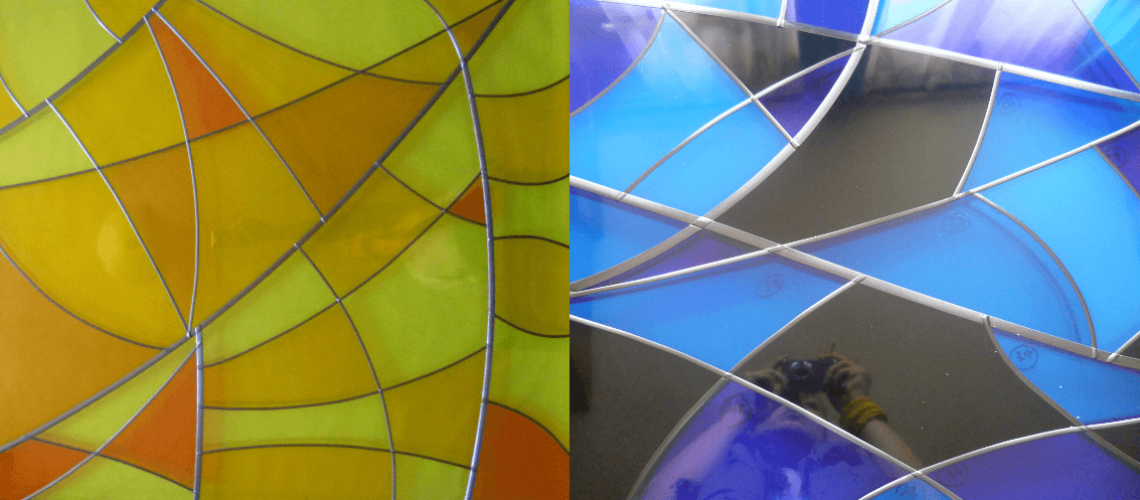
Stained glass is one of the most enchanting achievements of human creativity. It unites colour, light, and material to shape spaces that transform our perception of time and atmosphere. When light passes through coloured glass, it animates the forms and fills the space with a unique visual poetry that touches everyone who experiences it.
🧬 From Ancient Origins to Glass Windows
The story of coloured glass begins long before stained glass became part of European cathedrals. In ancient Egypt and Mesopotamia, artisans developed techniques for colouring glass using metallic oxides to produce rich hues. At that time, glass was primarily used for decorative objects and beads rather than architectural windows, yet these early discoveries laid the foundation for what would later become stained glass art.
(Source: EBSCO Research Starters – stained glass history)
During the Roman Empire, glass panes were used in the windows of wealthier buildings. Although these early windows lacked the brilliance and complexity of later stained glass, they marked an important step toward using glass as a medium for light in architecture.
(Source: American Vision Windows – history of stained glass windows)
🏛️ The Middle Ages: The Golden Age of Stained Glass
The true flowering of stained glass occurred in medieval Europe, particularly from the 12th century onward. Gothic cathedrals were designed with soaring walls and large openings filled with radiant glass windows. These works were not merely decorative — they formed a visual language, telling biblical stories and symbolic narratives to a largely illiterate population.
(Sources: Encyclopaedia Britannica; Lumen Learning)
One of the most celebrated examples is Chartres Cathedral in France, whose stained glass windows remain among the most extraordinary in the world, bathing the interior in deep blues and glowing reds that evoke a sense of sacred light.
🎨 The Renaissance and Artistic Evolution
During the Renaissance, stained glass techniques continued to evolve. Artists introduced more naturalistic figures, improved compositions, and subtler colour transitions. Although the Protestant Reformation in the 16th century led to the destruction of many medieval windows in parts of Europe, the tradition survived.
In the 19th century, stained glass experienced a major revival. Inspired by medieval craftsmanship, artists in England, Germany, and beyond returned to traditional methods while also experimenting with new materials and styles.
(Source: Holdman Studios)
🧠 Materials, Light, and Symbolism
Traditional stained glass is made from individual pieces of coloured glass joined together with lead strips. Colours are created by adding metallic oxides — cobalt produces blue, copper creates red, and iron yields green. Each formula produces subtle variations that glow differently when illuminated.
(Source: Eurolines Steel Windows)
Beyond its physical beauty, stained glass carries deep symbolic meaning. Scenes, figures, and abstract patterns communicate spiritual ideas, stories, and emotions. Light itself becomes part of the artwork, constantly shifting and bringing the glass to life.
🌍 Stained Glass Today
Today, stained glass continues to evolve beyond churches and cathedrals. Contemporary artists and architects use glass in museums, public buildings, and private homes, blending ancient techniques with modern design. The medium remains as expressive and powerful as ever.
(Source: Stained Glass Museum, Ely)
Stained glass reminds us that light and colour are not just physical elements — they are expressions of the human spirit.
📚 Sources & Inspiration
- Encyclopaedia Britannica – Stained Glass
https://www.britannica.com/art/stained-glass - Stained Glass Museum, Ely
https://en.wikipedia.org/wiki/Stained_Glass_Museum%2C_Ely - American Vision Windows – The History of Stained Glass Windows
https://www.americanvisionwindows.com/the-history-of-stained-glass-windows - Lumen Learning – Stained Glass: History and Technique
https://courses.lumenlearning.com/suny-ncc-zeliart/chapter/stained-glass-history-and-technique - Holdman Studios – The History of Stained Glass
https://www.holdmanstudios.com/blog/2020/1/27/the-history-of-stained-glass - Eurolines Steel Windows – Understanding Stained Glass Materials and Colors
https://www.eurolinesteelwindows.com/understanding-stained-glass-materials-colors-and-history
